

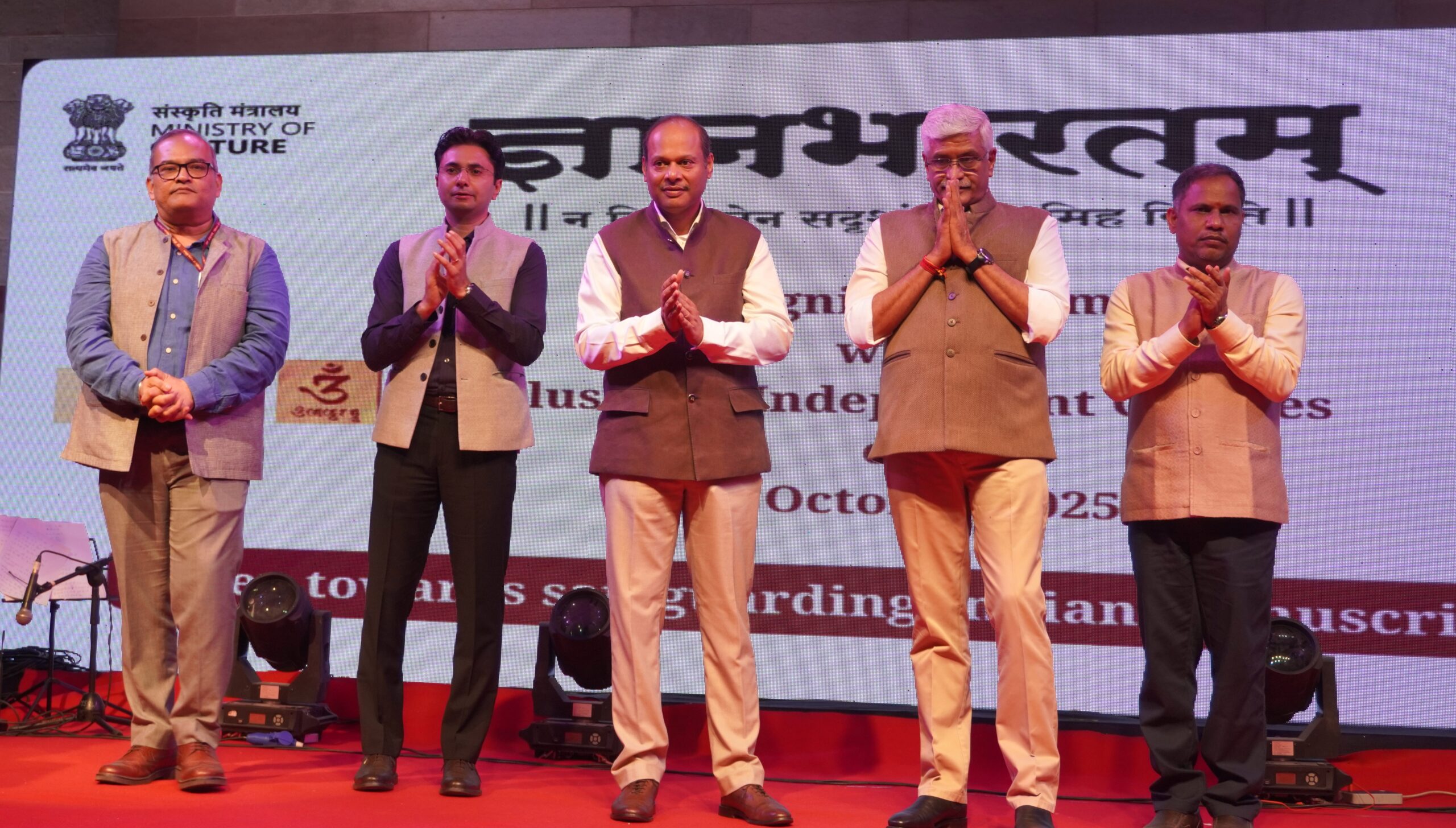
India’s manuscripts—etched on palm leaves, birch bark, and ancient paper—carry centuries of wisdom across science, spirituality, literature, and art. These fragile treasures are living testaments to the country’s intellectual and cultural legacy. Gyan Bharatam, a flagship initiative under the Ministry of Culture, is dedicated to safeguarding this heritage and bringing it into the digital age for scholars, seekers, and communities worldwide.
Join the Conversation – Live on YouTube

The Mission
Gyan Bharatam was created to ensure that India’s timeless knowledge is not lost to decay or obscurity. Its mission is to:
- Survey & Catalogue manuscripts across India through standardized national surveys.
- Conserve & Build Capacity by training experts in scientific preservation methods.
- Digitize with Technology to protect manuscripts and make them accessible globally.
- Translate & Decode ancient texts with the help of linguists and scholars.
- Research & Publish critically edited manuscripts for academic and public use.
 Treasures of Knowledge
Some of the manuscripts preserved and highlighted by Gyan Bharatam include:
- Kautilya’s Arthashastra rediscovered in Mysore after centuries.
- Rigvedasamhita, recognized by UNESCO for its cultural importance.
- Gilgit Manuscript, one of the oldest surviving Buddhist texts.
- Gandhara birch‑bark manuscript, containing early discussions on the concept of zero.
- Illustrated Ayurvedic manuscripts, including veterinary science.
- Persian translation of Valmiki’s Ramayana from 1715 AD.
Recent Milestones
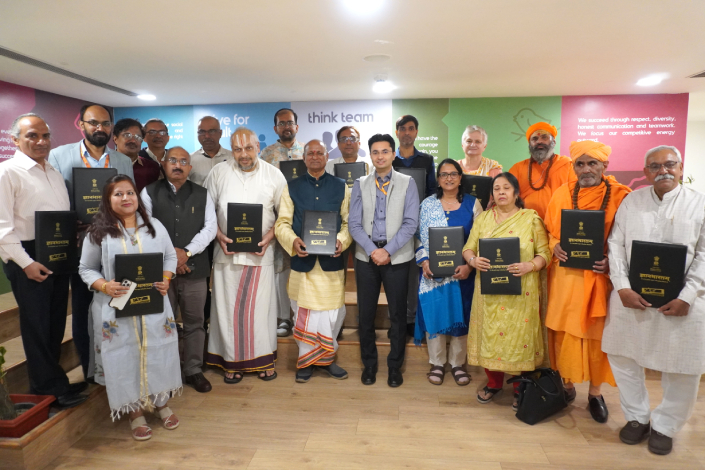
- The Ministry of Culture signed MoUs with 17 institutions across India to establish manuscript conservation centers.
- Rajasthan’s Abhay Jain Library in Bikaner became the state’s first official manuscript conservation center.
- Tara Prakashana joined the mission as one of 18 institutions nationwide.
- Upcoming events include international conferences and workshops to advance manuscript preservation and global collaboration.
 Why Gyan Bharatam Matters
- Cultural Continuity: Manuscripts are not relics; they are living records of India’s evolving thought.
- Global Relevance: By digitizing and translating, India’s wisdom becomes accessible to the world.
- Educational Impact: Students, researchers, and communities gain direct access to authentic sources.
- Sustainability: Eco‑friendly preservation methods ensure manuscripts survive for future generations.
Conclusion
Gyan Bharatam is more than a preservation project—it is a cultural movement. By combining conservation, digitization, and translation, it ensures that India’s timeless manuscripts continue to inspire and educate. In doing so, it positions India as a living repository of knowledge, where ancient wisdom meets modern technology.