

India generates nearly 170,000 tonnes of solid waste every day, yet a significant portion of it never reaches proper treatment facilities. While conversations around sustainability have grown louder, recycling often remains complicated, inconvenient, and easy to ignore. Hyderabad-based entrepreneur Abhishek Agarwal saw this gap not as a problem, but as an opportunity to change consumer behavior. Through ECOVANI Waste Management Pvt. Ltd. and its flagship brand Goodeebag, he is making recycling simple, rewarding, and accessible for everyday households.
Join the Conversation – Live on YouTube
The idea behind Goodeebag is refreshingly straightforward. Instead of asking people to change their lifestyle dramatically, the platform encourages them to segregate dry waste and rewards them for doing so. Customers simply scan a code, receive a Goodeebag at their doorstep, collect their household dry waste, schedule a pickup through the app, and earn points in return. Those points can then be redeemed for rewards and grocery benefits, creating an incentive-based recycling ecosystem that benefits both consumers and the environment.
For Abhishek Agarwal, the journey into waste management was anything but conventional. Coming from a business family in Hyderabad, he initially stepped away from engineering studies and explored different entrepreneurial ventures. In 2011, he founded Raghav Roadlines, a logistics company that served major industrial clients including BHEL, L&T, and Toshiba. Over the next decade, he built the company into a business generating between ₹3 crore and ₹4 crore annually, gaining valuable experience in supply chain operations and logistics management.
However, after stepping away from the logistics business, Abhishek began noticing another challenge emerging around him. The rapid growth of e-commerce, food delivery, and quick commerce platforms had led to a sharp increase in household packaging waste. While industrial waste management systems were relatively organized, residential recycling remained fragmented. The realization sparked a simple question: what if recycling could become as easy and rewarding as online shopping?
That insight led to the birth of Goodeebag in 2022. The startup’s earliest version was surprisingly humble. It started as a WhatsApp group within a gated community of just 200 villas. Initial participation was limited, but something changed when residents began receiving grocery rewards for the waste they contributed. The incentive created a powerful behavior shift, proving that households were willing to recycle when the process was easy and the benefits were tangible.
Today, that experiment has evolved into a growing waste management platform serving thousands of families. Goodeebag now collects nearly 4,000 kilograms of dry waste every day from approximately 25,000 to 30,000 households across Hyderabad. The company has also reached close to ₹1 crore in annual revenue, demonstrating that sustainability and business viability can go hand in hand when consumer engagement is at the center of the model.
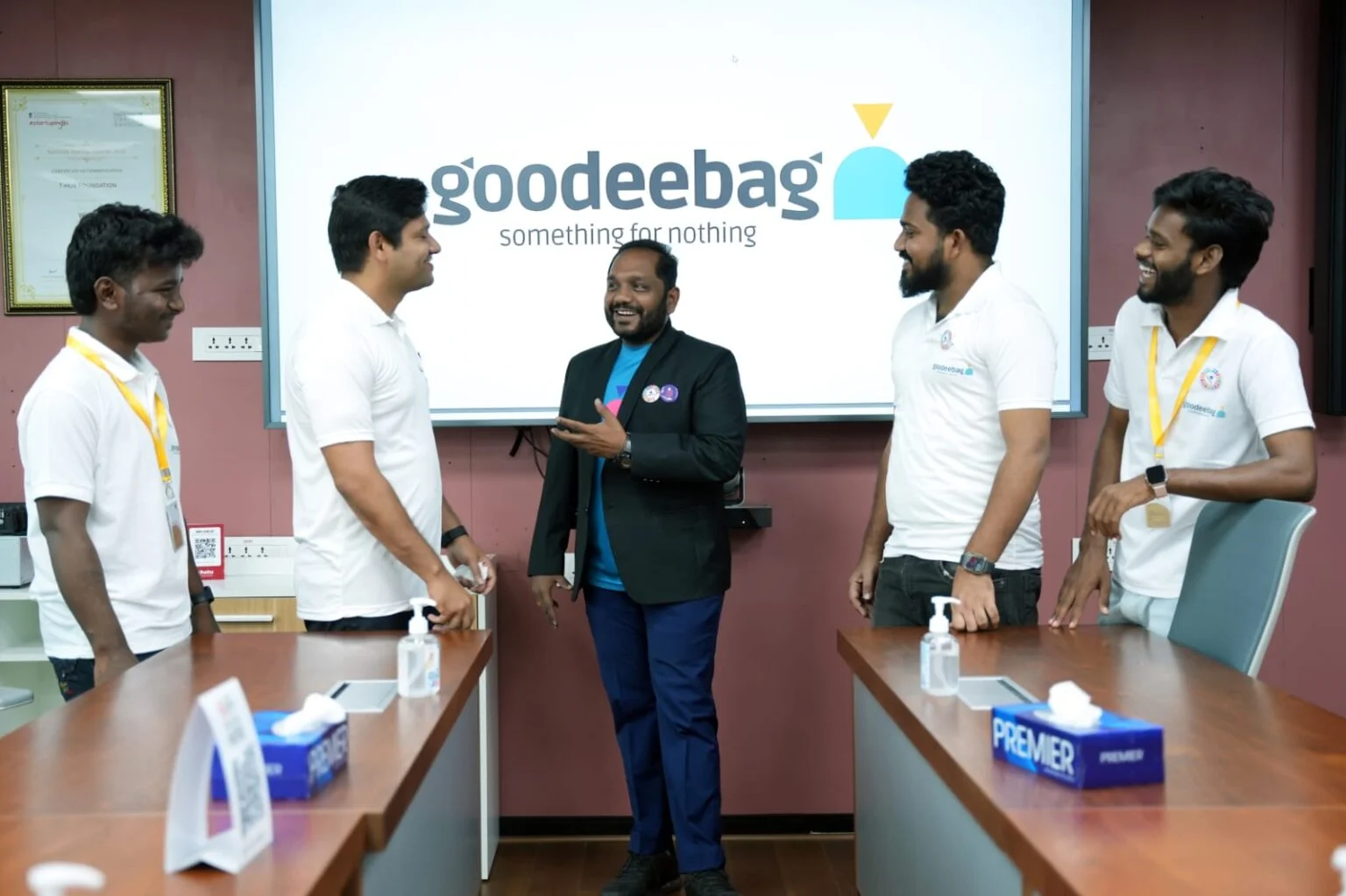 Beyond waste collection, Ecovani’s larger vision is to transform how society views recycling. The company believes that environmental responsibility should not feel like an obligation but rather an opportunity for positive participation. Through its reward-based approach, Goodeebag is creating a system where eco-conscious habits are recognized, celebrated, and consistently encouraged. Every bag collected represents not just waste diverted from landfills, but a small step toward changing consumer behavior at scale.
Looking ahead, Abhishek Agarwal has ambitious plans for expansion. His goal is to educate one crore families about sustainability, expand Goodeebag to 10 metro cities and five countries, and eventually reach five crore families within the next five years. More importantly, he sees the venture as a social movement rather than just a waste management company. Under Ecovani’s mission of being a “Voice for the Voiceless,” Goodeebag is proving that when sustainability is made simple and rewarding, ordinary households can become powerful agents of environmental change.